My first encounter with Clive Barker’s twisted mind was highly unusual. Unlike many who discovered him through books or film, as a kid I first played his game, Undying, from 2001. I was instantly hooked and just wanted more.
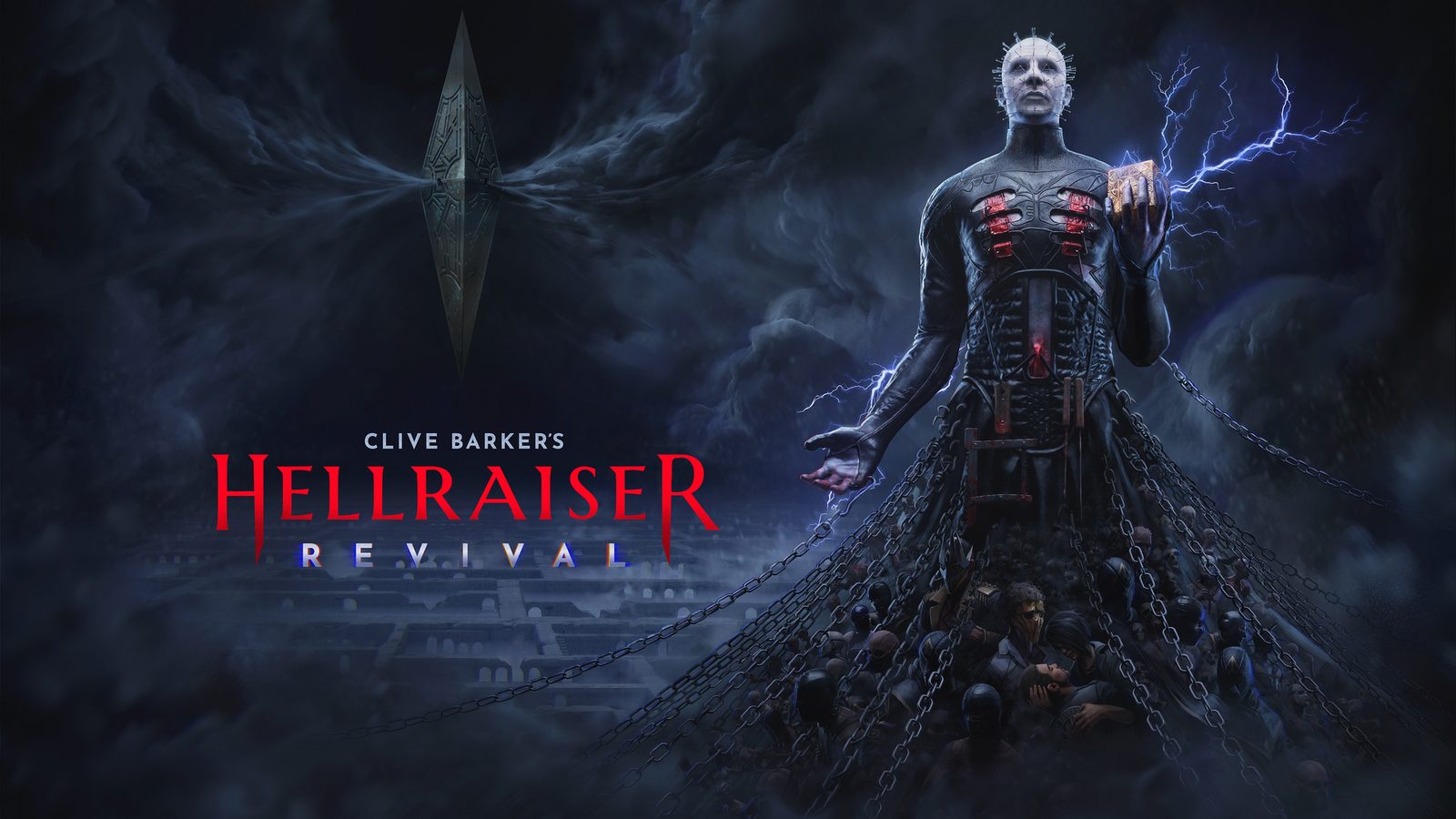
My wish came true six years later with the release of Jericho, which also bore Clive Barker’s unmistakable stamp. Sadly, it seemed this would be his swan song in the world of video games – Undying sold poorly, Jericho had its own problems, and another title, Demonik, was abruptly cancelled. Fate had other plans, however, as 2025 saw the announcement of the first game in the Hellraiser universe, also bearing Barker’s name. As the cherry on top, the project was entrusted to our own Mad Head Games studio under the Saber Interactive umbrella, now known as Saber Serbia.
It all started with Barker’s 1986 work The Hellbound Heart. A year later, the novella became a film that spawned an entire franchise, along with the now cult horror villain Pinhead. The sequels kept the general aesthetic but quickly changed direction, while the guys and gals at Saber Serbia decided to return to the roots, themes and ideas of the original.

Clive Barker’s Hellraiser: Revival starts in fifth gear, immediately throwing us into an intense, intimate scene between the protagonist Aidan and his girlfriend Sunny. Slaves to every possible narco-sexual vice, both have devoted their lives to the pursuit of extreme experiences that the average person would fiercely condemn. That includes occult artefacts, among them the enigmatic little box known as the Genesis Configuration.
At the climax, Sunny unlocks the puzzle and summons the Cenobites, superior beings who live on the edge of suffering and pleasure. Their leader, the Hell Priest, better known as Pinhead, sends Sunny into the Labyrinth, a dimension ruled by the mysterious deity Leviathan. Before he gets a chance to figure out what happened, a desperate Aidan is imprisoned in the underground chambers of the Scarlet Church, a BDSM sect that seeks to create new Cenobites on Earth. This is where his search for Sunny begins.
Although these segments aren’t equal in length, the gameplay can be split into two parts – our dimension and the Labyrinth. Exploring the mostly linear halls of the Scarlet Church, you’ll often run into cult members and their abominations, puzzles, subtle narrative threads in the form of documents and audio recordings, as well as more direct story catalysts such as cutscenes and flashbacks.
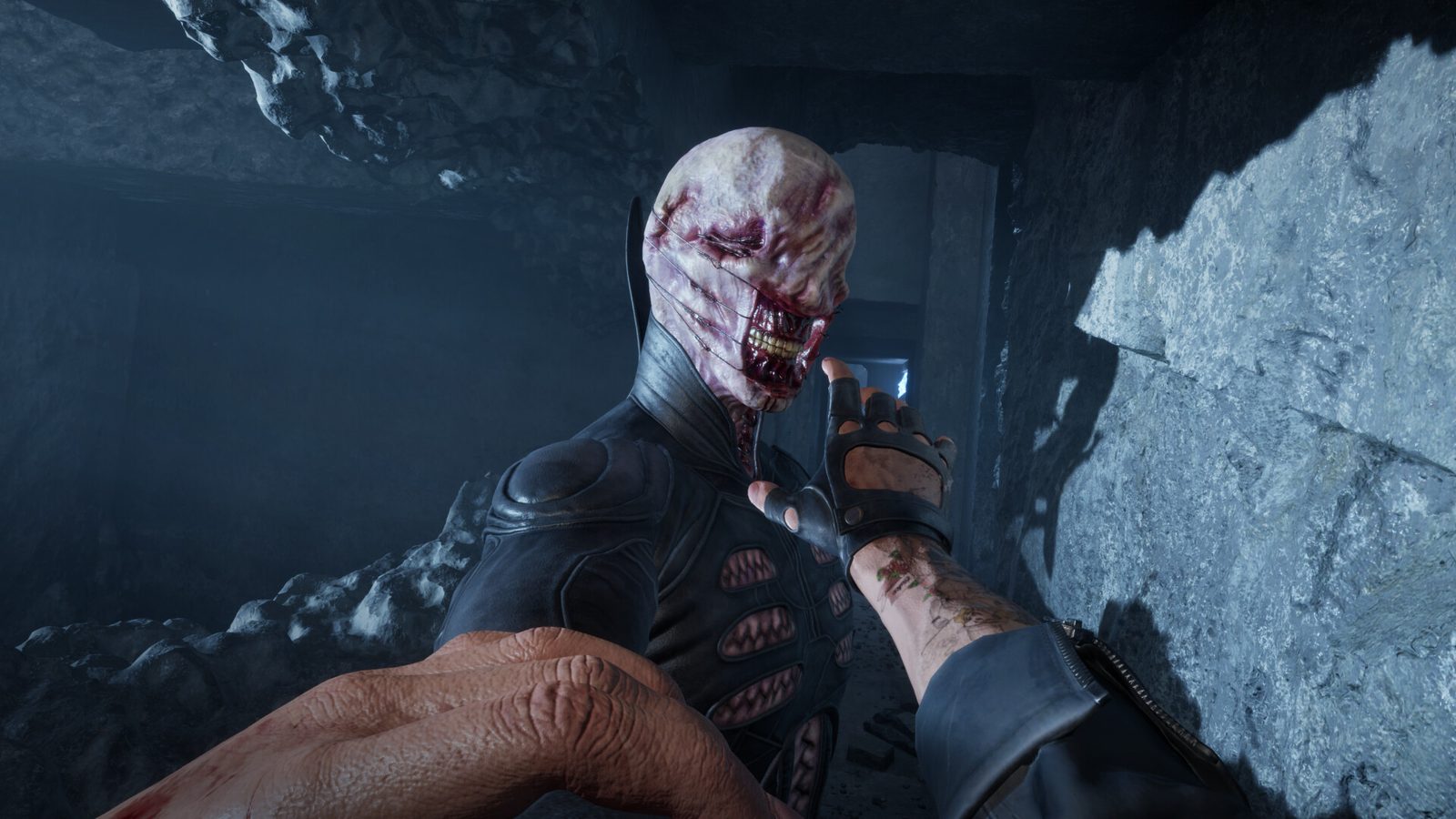
Clive Barker’s Hellraiser: Revival has several things in common with recent Resident Evil games (parts of RE7 and RE8, Requiem) – first-person survival horror gameplay, crafting, inventory and resource management, buying from vendors, stealth, stalker enemies and melee/gun combat. Let’s look at each of these elements.
Horror is subjective, but few will remain indifferent to the cacophony of terror the game constantly spams. Besides aesthetics and atmosphere that are 100% faithful to Barker’s vision, I was hugely impressed by the portrayal of the twisted human mind, visible in every corner of the Scarlet Church – the cultists’ ego trips and fanaticism, dismembered bodies, sculptures made of human corpses (à la Tzimisce), streams of blood and other nasty stuff.
Crafting is a key part of resource management, as healing items and ammo are scarce. You’ll combine alcohol and cloth for bandages, and gunpowder and scrap metal for ammo, while for more advanced items you’ll need the right recipes, which you can buy from vendors along with other resources and gear. Although the game has a stash, you won’t be able to grab everything you find, as the inventory has a limited number of slots, especially early on.
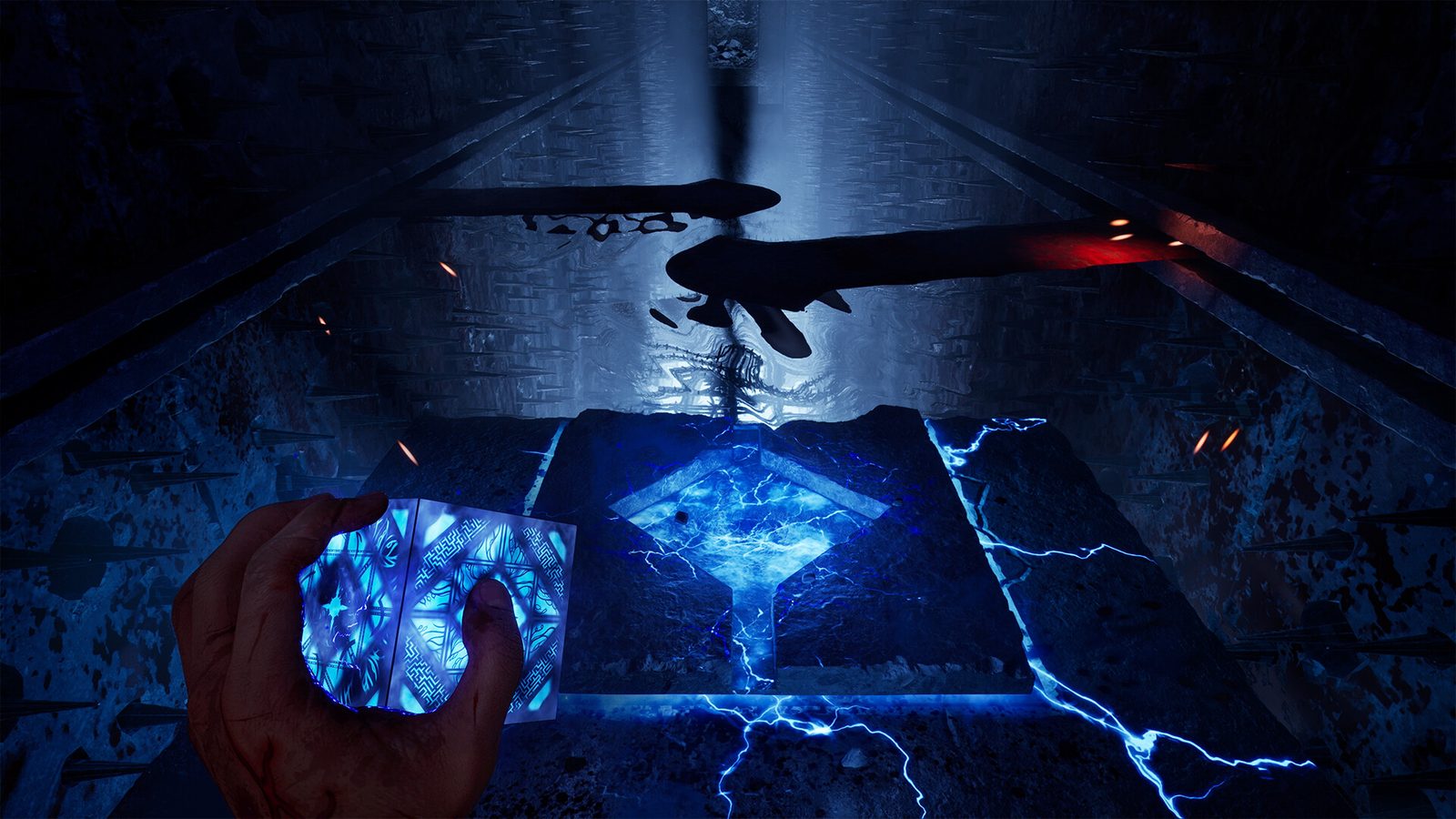
A solid arsenal of melee and ranged weapons will help you deal with the cultists and the fleshy abominations. Melee combat is the absolute highlight for me, and I think it’s far more fun than the gunplay, which at times noticeably lowers the tension of a horror game. All melee weapons (knives, machetes, cleavers, baseball bats…) have durability – you need to repair them after a few hits or they will break for good. Finally, there’s the Genesis Configuration, which offers a few powerful spells such as telekinesis, but in return demands the suffering of your enemies instead of classic mana or energy.
Stealth and running away are the solutions for invincible enemies or situations where you’re low on resources. Apart from a few practical uses (the game has a silent takedown), I found the stealth segments incredibly boring. They do heighten the tension, true, but in my case that mostly meant nervousness and a desire for these parts to end as soon as possible.
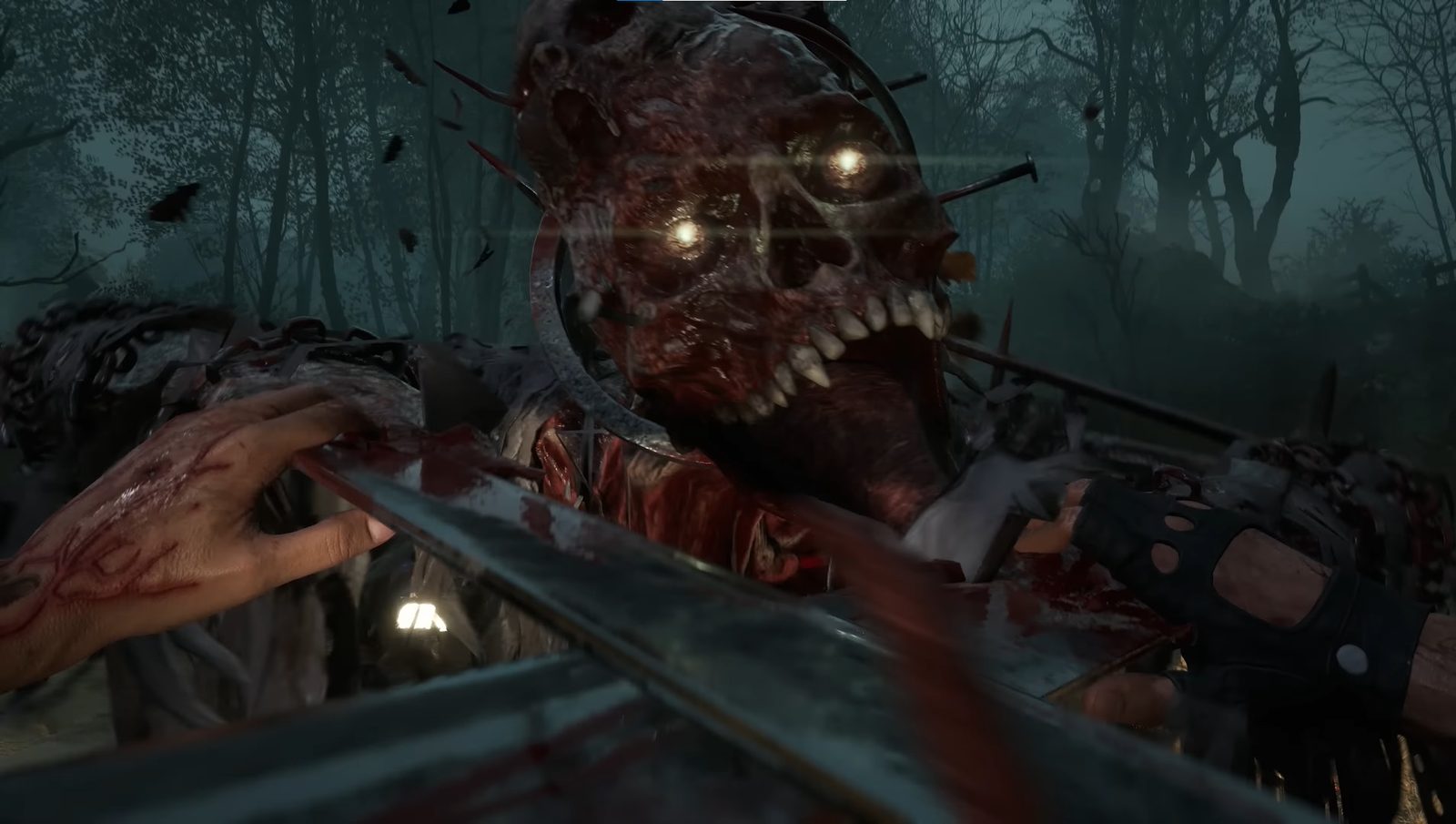
By contrast, Clive Barker’s Hellraiser: Revival shines brightest in its most intense moments, especially the boss fights, close-quarters combat and chases with stalker enemies. Among them is a Cenobite called the Chatterer, who keeps you company during your first few excursions into the Labyrinth. You’ll hear his teeth chattering as he follows you at slasher-villain speed, only to suddenly cut you off and take your life just short of the exit.
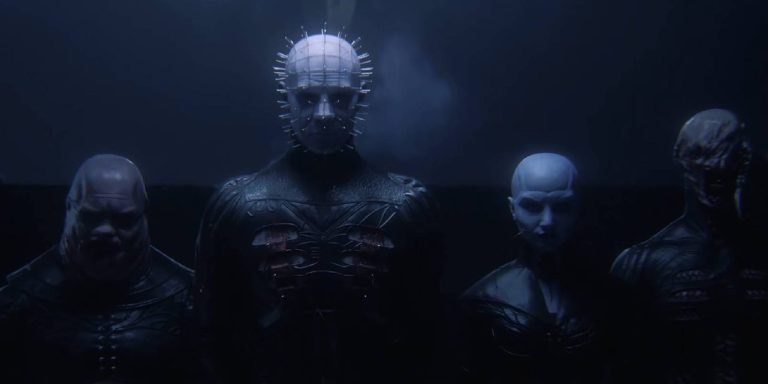
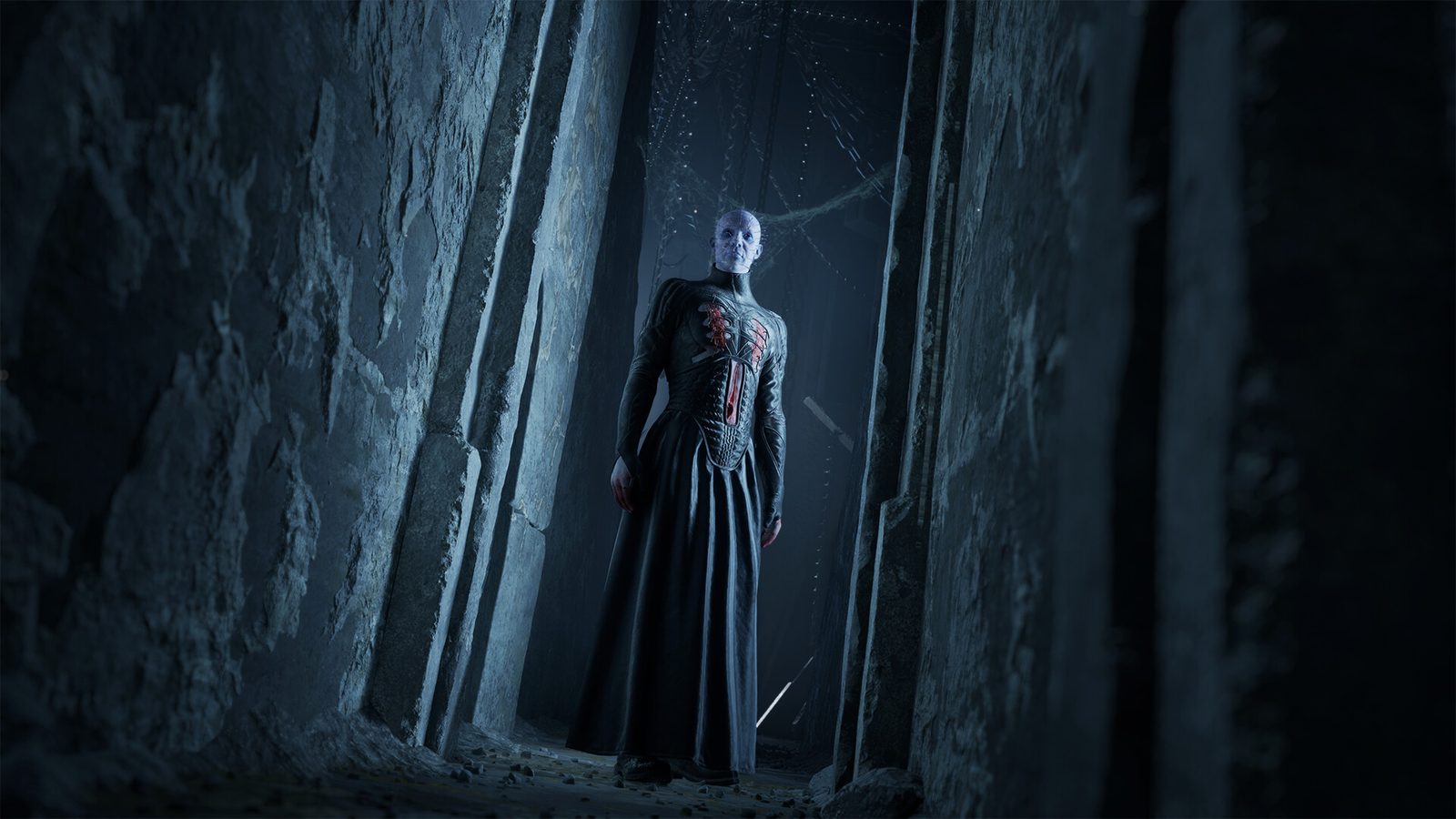
Vile and terrifying yet charismatic, the members of Pinhead’s order radiate an energy few can resist. Doug Bradley shines once again as the lead Cenobite, and an extra treat for Hellraiser fans are the references to the original film. I felt like a tiny speck on the tapestry of the universe as Pinhead eloquently called me out, and these are definitely some of the game’s best moments.
Besides hanging out with the Cenobites, Leviathan’s Labyrinth has other charms. In gameplay terms, the whole area is a huge Indiana Jones obstacle course with lots of blades, spikes, saws, crushers, meat hammers and similar traps, but no challenge requires platforming, as there is no jump action. The Labyrinth is a barren, grey, cold concrete abomination that constantly shifts, an endless network of brutalist monuments of impossible architecture beneath an eternal storm (post-apocalyptic tower blocks). This area is another easy ten for art direction and a welcome contrast to our dimension.
On PC I didn’t run into any bugs or performance issues, and if there were any, the biggest have probably been fixed, as the development team has since released several patches. What did slightly dampen the overall impression were small slips in various aspects of the game, including frequent, mostly unnecessary hints. None of it is dramatic, but it can sometimes distract from an otherwise excellent horror adventure.
Using Barker’s vision as a language, a tool, an instrument and a palette, Saber Serbia has crafted an extremely mature, human and timeless story that might not have been as convincing if censored. This game was made by true fans of the franchise who proved that shock value isn’t the core of Hellraiser, and that beneath a thick layer of flesh, debauchery and perversion lies something much more. For me, this project is also a small victory against the epidemic of sterile AAA games that rule the modern industry.
The void calls. How you answer is up to you.
The game is available on PC, PS5, Xbox Series X/S and Nintendo Switch 2
Author: Božidar Radovanović
Game provided by: Sandbox Strategies